


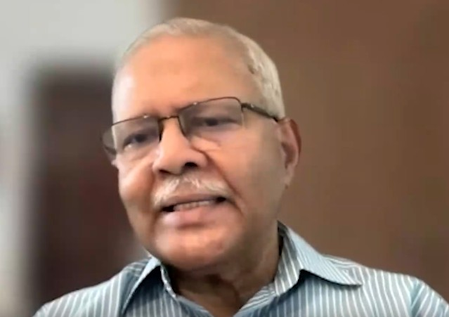
India’s former Ambassador to China, Ashok K. Kantha, described the recent two-week ceasefire agreement between the US and Iran as “ambiguous” while also acknowledging it as a “window of opportunity.” Kantha highlighted that the ceasefire is a temporary de-escalation, with many unresolved issues remaining. He emphasized that there is no current joint understanding in place between the involved parties.
Following President Donald Trump’s announcement of a conditional pause in planned attacks related to reopening the Strait of Hormuz, Kantha pointed out the absence of a fully implemented joint agreement. He noted the current ambiguity of the situation but expressed optimism about the potential for progress. Kantha stressed the importance of observing the actual developments on the ground to assess the situation accurately.
Regarding the management of the Strait of Hormuz, Kantha explained that while Iran has agreed to allow commercial shipping to resume, the terms involve military oversight by Iran and unspecified technical conditions. He highlighted the US’s step back from a crisis it initiated with President Trump’s ultimatum to Iran. Kantha also discussed Iran’s strategic use of the strait as a leverage point and its ability to emerge stronger despite facing significant challenges.
Kantha further mentioned ongoing negotiations between Oman and Iran to establish a protocol for managing the Strait of Hormuz, indicating a shift in the traditional US stance on freedom of navigation. He pointed out Iran’s demonstrated capability to inflict damage on militarily superior adversaries like the USA and Israel. Kantha questioned the effectiveness of US sanctions on Iranian oil, suggesting that Iran continues to sell oil with global support.
