


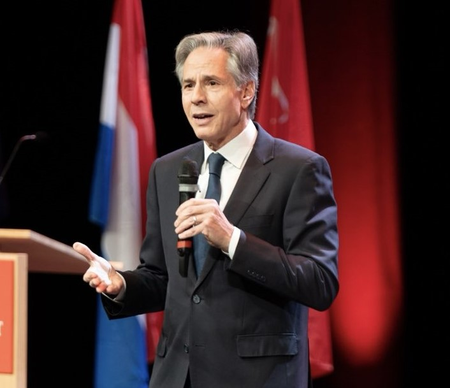
Former US Secretary of State Antony Blinken has cautioned that Washington could jeopardize its gains against Iran by risking a lasting strategic setback. Blinken emphasized the importance of restraint and diplomacy amid a fragile ceasefire holding between the two nations. He highlighted that while recent actions may be tactically successful, they could lead to strategic failure, as Iran still possesses crucial military capabilities like highly enriched uranium, centrifuges, and missiles.
Blinken pointed out that Iran’s control over the vital Strait of Hormuz has provided the country with a significant advantage, marking a pivotal moment that enhances Iran’s bargaining power. Despite 21 hours of talks between the US and Iran in Islamabad resulting in only a tentative ceasefire, Blinken underscored the challenging decision facing President Donald Trump in the absence of a successful negotiation: whether to escalate tensions or seek a compromise.
The former Secretary of State warned against the option of restarting a war, citing its high risks and costs. Instead, he urged the US administration to refrain from further military actions and explore diplomatic solutions, emphasizing the need to maintain pressure on Iran through alternative means while engaging in prolonged negotiations for a potential deal. Blinken stressed that any agreement would necessitate concessions and highlighted the significance of addressing issues related to the control and access to the Strait of Hormuz in the negotiation process.
Reflecting on his past involvement in the 2015 nuclear deal, Blinken noted the slow and intricate nature of reaching agreements with Iran. He acknowledged the historical rarity of Iran making significant compromises and pointed out internal divisions within the country as a challenge in negotiations. Despite recognizing the complexities involved, Blinken praised Iranian negotiators for their expertise and highlighted the potential for compromise on uranium enrichment levels, proposing a scenario where Iran could enrich uranium at minimal levels with a limited stockpile without formal recognition of a right to enrichment.
Blinken also discussed the Biden administration’s efforts to revive the nuclear deal following the US withdrawal under the Trump administration. He mentioned the obstacles posed by Iran’s demands for guarantees against future agreement abandonment by subsequent US administrations, citing the inherent difficulties in providing such assurances within the US political landscape. The negotiations were further complicated by Iran’s expanded nuclear activities and domestic political pressures in both countries, underscoring the intricate nature of the diplomatic process.
