


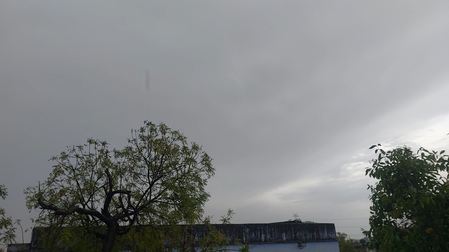
A new weather system is expected to affect Rajasthan starting Saturday, with widespread impact across all districts. Over the next few days, the state is likely to experience overcast skies, rainfall, thunderstorms, and isolated hailstorms. On March 28, parts of the Jodhpur and Bikaner divisions, along with the Shekhawati region of western Rajasthan, may see scattered dust storms and light rainfall during the afternoon hours.
From March 29 to 31, as the Western Disturbance intensifies, various regions, including Jodhpur, Bikaner, Ajmer, Jaipur, Bharatpur, Udaipur, and Kota divisions, could witness intense thunderstorms, dust storms with wind speeds of 40-50 km/h, and scattered light to moderate rainfall. The first week of April may also bring scattered light rainfall to the western and northern parts of the state due to successive Western Disturbances.
The Meteorological Centre in Jaipur has issued a ‘Yellow Alert’ for rain in seven districts on March 28, along with guidance for farmers. Temperatures in Rajasthan are expected to be moderate during the initial days of April. In the past 24 hours, most cities in Rajasthan experienced clear weather with strong sunshine, leading to mild heat. Kota recorded the highest maximum temperature at 37.2 degrees Celsius, with other major cities like Jaipur, Jodhpur, Udaipur, Kota, Ajmer, and Bikaner also witnessing bright conditions.
The Meteorological Centre in Jaipur has cautioned about intermittent rainfall, thunderstorms, and isolated hailstorms from March 28 to April 1, with potential activity thereafter. Farmers are advised to take precautions to safeguard crops, shift harvested crops to safer locations, protect produce in open areas, and ensure proper covering to prevent losses from rain and hail. The incoming weather system poses risks to standing and harvested crops, necessitating proactive measures.
According to Radheshyam Sharma, Director of the Meteorological Centre in Jaipur, Rajasthan is likely to experience a continuous spell of rain and thunderstorms until April 1, with temperatures expected to remain near or below normal levels due to successive weather systems in the first week of April.
