


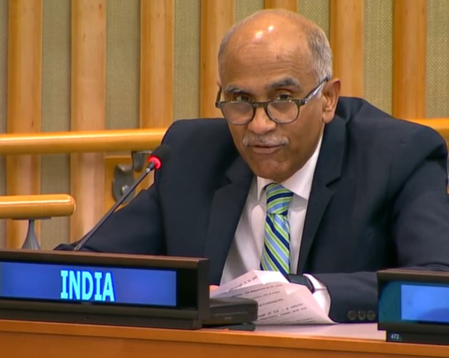
Delaying reforms to the United Nations Security Council could lead to increased human suffering and misery, caution the G4 nations. India’s Permanent Representative, P. Harish, speaking on behalf of the G4, emphasized the urgency to act swiftly in restructuring the Council, citing the loss of countless innocent lives to ongoing conflicts. The G4, comprising India, Brazil, Germany, and Japan, advocates for Council reform and supports each other’s bid for permanent seats on a reformed body.
The G4 stressed the critical need for timely action, noting the world’s current challenges and the UN’s credibility being questioned due to its inability to address conflicts effectively. Harish highlighted the obstacles posed by status-quoists over the years, hindering Security Council progress and contributing to its failures. The Inter-Governmental Negotiations (IGN) for Security Council reforms face resistance from a group of countries known as the Uniting for Consensus (UfC), who employ procedural tactics to block the adoption of a negotiating text.
Gianluca Greco, the deputy permanent representative of Italy leading the UfC group, insisted on consensus before drafting reform texts and reiterated the group’s stance against expanding permanent membership. In contrast, Harish emphasized the G4’s firm belief in text-based negotiations with clear milestones and timelines as central to the IGN process. The G4 remains committed to developing a consolidated model that incorporates suggestions from all UN members to facilitate negotiations.
Harish outlined the G4’s proposed reforms, advocating for an increase in the Council’s size from 15 to 25 or 26 members, including six new permanent seats. The model aims to reflect contemporary geopolitical realities, with specific allocations for regions like Africa, Asia Pacific, Latin America, and Western Europe. The G4 opposes introducing new seats based on religious affiliation, emphasizing the need to address historical injustices against Africa in Council representation.
