


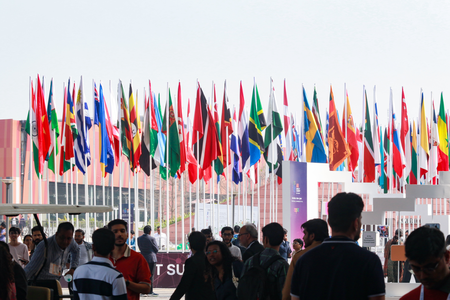
In a move showcasing India’s dedication to inclusive and ethical artificial intelligence (AI) progress, the government has unveiled a Casebook on AI and Gender Empowerment. Developed by the IndiaAI Mission under MeitY in collaboration with UN Women and supported by the Ministry of Women and Child Development (MoWCD), this initiative was officially introduced at the ‘India AI Impact Summit 2026’. The casebook features 23 real-world AI solutions from various countries across the Global South, highlighting their impact on gender equality and women’s empowerment.
The selection process for the casebook involved evaluating 233 submissions from over 50 countries to identify 23 AI solutions that have made tangible contributions to gender equality and women’s empowerment. An independent evaluation committee, consisting of senior officials from MeitY, MoWCD, and UN Women, assessed the submissions based on criteria such as real-world deployment, measurable gender impact, and evidence-based outcomes. These solutions cover key areas like healthcare, economic empowerment, digital safety, climate resilience, access to justice, education, and skills development.
The casebook gained international acclaim when United Nations Secretary-General Antonio Guterres visited the UN Women stall at the JanAI Expo. During his visit, the Secretary-General interacted with young women from rural communities who are part of the WeSTEM project, which is a collaborative effort between UN Women, the Governments of Madhya Pradesh, Gujarat, and Maharashtra, the European Union, Micron, Nokia, and the Head Held High Foundation. These young women shared their experiences of using AI to enhance skills, improve learning access, and explore new job opportunities, illustrating a practical pathway towards becoming future technology leaders.
The casebook is positioned as a valuable knowledge repository for policymakers, technology developers, researchers, and practitioners. It offers insights into ensuring that AI systems are not only ethical and inclusive but also responsive to the diverse needs of women and girls in India and other regions of the Global South.
