


With the West Asia conflict showing no signs of resolution, Gulf nations are ramping up efforts to reduce their dependence on the vital Strait of Hormuz, a key passage for almost 20 million barrels of oil daily. Recent attacks on shipping and escalating geopolitical risks have spurred these nations to accelerate plans for alternative routes such as pipelines and overland passages. Saudi Arabia and the United Arab Emirates are leveraging existing infrastructure like the East-West pipeline and Abu Dhabi Crude Oil Pipeline to partially bypass the strait, ensuring continuous oil exports.
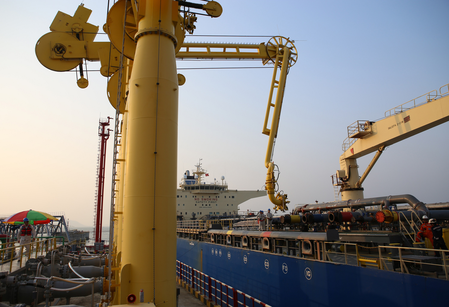
Saudi Arabia’s Petroline, a 1,200-kilometer pipeline from its eastern oil fields to Yanbu port, can handle around 7 million barrels per day, playing a crucial role in maintaining export flows during the crisis. The UAE is utilizing the Abu Dhabi Crude Oil Pipeline, connecting Habshan fields to Fujairah port with a capacity of up to 1.8 million barrels per day, allowing exports to circumvent the Strait of Hormuz. These pipelines offer important alternatives, although they can only partially mitigate disruptions in Gulf oil shipments, prompting both countries to consider expansion plans for enhanced export flexibility.
Saudi Arabia is contemplating boosting the East-West pipeline’s capacity, constructing new routes, and developing export terminals along the Red Sea coast, including at the Neom project. Meanwhile, the UAE is exploring the possibility of a second pipeline to Fujairah to bolster its bypass capabilities. These options are viewed as quicker to implement compared to complex cross-border projects, and Gulf states are also exploring regional pipeline networks to enhance long-term resilience. Experts believe interconnected corridors across the region could provide better security than isolated routes, with the current crisis accelerating discussions on such projects.
