


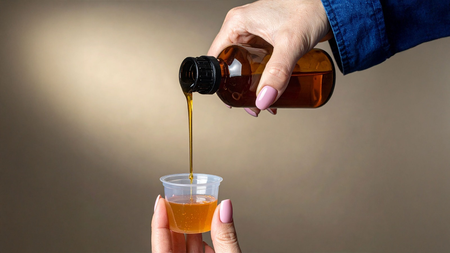
The Health Ministry is contemplating a ban on prescribing pediatric cough syrups for children under two years old and advising against their use for those under five. This potential action, part of the draft National Formulary of India (NFI) 2026 released by the Indian Pharmacopoeia Commission, signifies a significant change in prescription guidelines following last year’s contamination-related fatalities. The draft NFI, serving as a reference for healthcare professionals by standardizing drug information, explicitly states that cough and cold medications should not be recommended for children under two years.
The draft further emphasizes that such medications are generally not suitable for those under five without thorough clinical assessment and close monitoring. It also places the responsibility on pharmaceutical companies to independently test inputs and final products to ensure accountability throughout the supply chain. Various industry bodies, including the Indian Drugs Manufacturers Association, are currently evaluating the draft for feedback.
This proposed measure comes in response to contamination-related deaths in 2025 associated with toxic industrial solvents like diethylene glycol (DEG) and ethylene glycol (EG) found in liquid oral formulations. The Indian Pharmacopoeia Commission (IPC) has updated standards for high-risk excipients such as glycerin, propylene glycol, sorbitol solution, and liquid maltitol to address the contamination issue due to potential DEG impurities. Manufacturers are required to use pharmacopoeial-grade solvents and conduct thorough batch-wise testing of crucial inputs and finished products in approved laboratories while maintaining detailed records.
Experts in public health and medicine have lauded this initiative, stating that cough syrups provide limited therapeutic benefits for infants and carry disproportionate risks. They emphasize that cough is a natural protective reflex, and treatment should target underlying causes rather than merely suppressing symptoms.
