


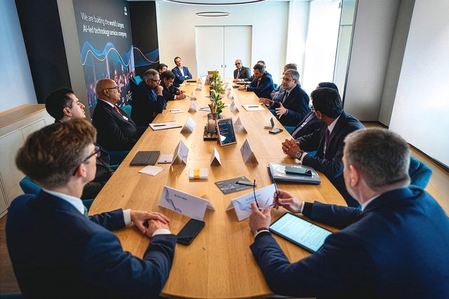
IBM Chairman and CEO Arvind Krishna, speaking at the World Economic Forum (WEF) annual meeting in Davos, encouraged Indian entrepreneurs to enhance local capabilities in semiconductors, model development, and real-world applications to strengthen “AI sovereignty” in India. Krishna emphasized the significance of smaller, specialized AI models, which now constitute nearly 95% of consumption, in driving advancements. He cited China’s DeepSeek as a case in point, underscoring the need for specialized AI systems trained on local datasets from sectors like healthcare, defense, and law to foster effective domestic applications and promote a culture of experimentation and resilience.
Union IT Minister Ashwini Vaishnaw, also speaking at the event, highlighted the shift of Indian IT companies towards AI, leading to increased hiring in the sector. India is currently working on developing 12 AI models, with plans to launch at least four of them soon. Vaishnaw emphasized the country’s focus on sector-specific small models to enhance productivity across various industries. He noted that India has attracted substantial investments, amounting to $70 billion, in AI-enabling infrastructure, including data centers from major players like Google and Amazon.
Moreover, Vaishnaw pointed out the progress in India’s semiconductor program, with 10 fabrication plants under construction, three pilot projects in progress, and four units expected to commence commercial operations by 2026. He highlighted the recent government decision to allow private sector involvement in nuclear power generation to meet the energy demands for large-scale AI computing. A report projected significant growth in India’s semiconductor demand, expected to rise from $33 billion in 2022 to $117 billion by 2030. The government’s Rs 7,280 crore scheme for Sintered Rare Earth Permanent Magnets (REPM) is anticipated to bolster India’s semiconductor manufacturing ambitions by ensuring secure access to critical materials.
