


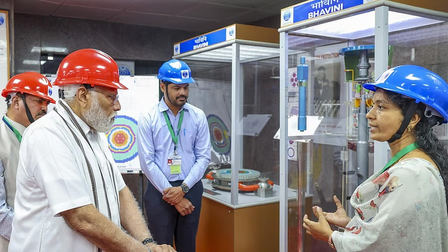
The International Energy Agency (IEA) praised India and Prime Minister Narendra Modi for reaching a significant milestone with the successful criticality of the 500 MWe Prototype Fast Breeder Reactor (PFBR). This achievement was hailed as an important technological advancement by the global energy body. The PFBR is expected to use less nuclear fuel compared to traditional reactors, paving the way for a more efficient fuel cycle.
India’s PFBR at Kalpakkam recently achieved first criticality, initiating a controlled nuclear fission chain reaction. Prime Minister Modi described this accomplishment as a crucial step in the country’s civil nuclear journey. He emphasized that the PFBR’s capabilities align with the second stage of India’s three-stage nuclear program, showcasing the nation’s scientific and engineering prowess.
The Prototype Fast Breeder Reactor, designed and constructed indigenously at Kalpakkam, reaching criticality signifies a significant moment for India. This advanced reactor, capable of producing more fuel than it consumes, highlights India’s scientific and engineering capabilities. It is a crucial advancement towards leveraging the abundant thorium reserves in the third stage of the nuclear program. Prime Minister Modi expressed pride in the achievement, extending congratulations to the scientists and engineers involved.
The reactor, developed by the Indira Gandhi Centre for Atomic Research (IGCAR) and built by Bharatiya Nabhikiya Vidyut Nigam Ltd (BHAVINI), is a key element of India’s nuclear program. Fast breeder reactors like the PFBR play a vital role in enhancing fuel efficiency and sustainability by generating more fissile material than they consume. Officials anticipate that the PFBR will contribute to India’s long-term goal of utilizing its extensive thorium reserves and establishing a closed fuel cycle through nuclear material recycling and waste reduction.
