


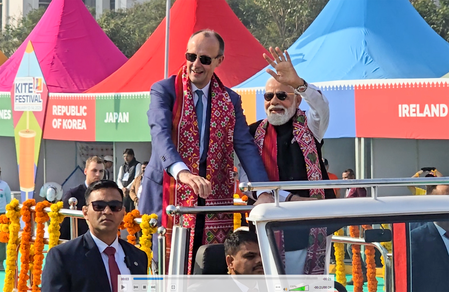
India and the European Union are in the final stages of negotiating a significant Free Trade Agreement (FTA), which could reshape India’s trade relations with its largest goods partner. German Chancellor Friedrich Merz’s recent visit to India is seen as reinforcing Germany’s support for expediting the deal, focusing on trade, investment, and green technology. Talks between India and the EU have faced challenges related to carbon border adjustment mechanisms, market access, and regulatory standards, entering a critical phase.
Merz’s visit, the first to Asia during his tenure as Chancellor, signals Germany’s intent to strengthen India as a strategic partner in Europe’s Indo-Pacific strategy. Negotiations between India and the EU, which began in 2007 but stalled due to disagreements on tariffs and market access, have regained momentum in 2022 amidst global supply chain disruptions and geopolitical tensions. The FTA aims to reduce or eliminate tariffs, enhance market access, and deepen investment connections.
The FTA is anticipated to provide Indian exporters with new opportunities for diversification and reduced reliance on China, especially after facing challenges from high US tariffs. While the agreement offers prospects for increased exports, investments, and supply chain diversification, concerns linger regarding regulatory hurdles, market access, and safeguarding domestic industries. Once finalized, this FTA would mark India’s 19th trade agreement, following recent deals with various countries.
The EU is a crucial trading partner for India, constituting nearly 11% of its total trade, with significant exports and imports. The agreement is poised to grant Indian exporters access to the EU’s market of 450 million consumers, benefiting sectors like textiles, leather, pharmaceuticals, and IT services through tariff reductions. The FTA could attract more foreign direct investment, particularly in green technology and advanced manufacturing, aligning with India’s “Make in India” initiative.
Indian negotiators are addressing concerns raised by some farmers and small manufacturers regarding competition from subsidized European products, particularly in sensitive sectors like dairy and agriculture. Compliance with the EU’s stringent environmental, labor standards, intellectual property protections, and data privacy rules pose challenges for Indian industries. Efforts are underway to address these issues and ensure a balanced agreement that supports India’s global trade standing in a multipolar world.
