


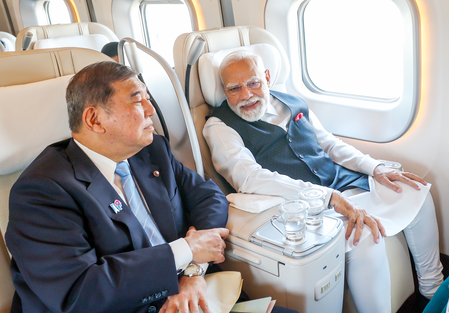
As global supply chains shift and businesses seek alternatives to China, India has become an attractive long-term investment option for Japan’s mid-sized companies. The India–Japan ‘Joint Vision for the Next Decade’, established during Prime Minister Narendra Modi’s visit to Tokyo in August 2025, promotes collaboration between small and medium enterprises (SMEs) from both countries. Japan is looking at India as a potential production base due to its export-oriented policies and extensive trade agreements network.
The two nations have identified various sectors for enhanced cooperation in the upcoming years, with semiconductors and electronics being highlighted as promising areas. Japan’s expertise in semiconductor technologies complements India’s growing electronics market and government support. This partnership could lead to the joint development of semiconductor facilities and deeper integration of electronics supply chains.
India’s large domestic market provides stability amid global market fluctuations and serves as a strong foundation for continuous business expansion. Additionally, its strategic geographical location enhances its attractiveness for accessing markets in the Middle East and Africa. Japanese companies establishing manufacturing units in India can leverage these connections to expand globally.
India’s existing and upcoming free trade agreements and partnerships with major economies offer new market opportunities amidst global uncertainties. The article emphasizes the importance of micro, small, and medium enterprises (MSMEs) in sectors like packaging, cold chain infrastructure, warehousing, dairy, aerospace, and defense. Notably, Mitsui & Co, Ltd’s investment in Sneha Farms Pvt Ltd, a leading Indian broiler producer, signifies a milestone in India-Japan MSME collaboration.
The food processing sector in India presents a lucrative investment avenue for Japanese firms, particularly in fruits, vegetables, and spices, positioning India as a potential base and export hub. Japan’s engagement with Northeastern states in India, focusing on sectors like bamboo value chain, organic farming, horticulture, and tea industry, aims at enhancing value addition and innovation in these areas.
Japan stands as India’s fifth-largest investor, with significant foreign direct investment (FDI) inflows totaling $44.40 billion over the last two decades. With over 1,500 Japanese companies currently operating in India, the MSME sector is expected to further boost this trend and drive future growth opportunities.
