


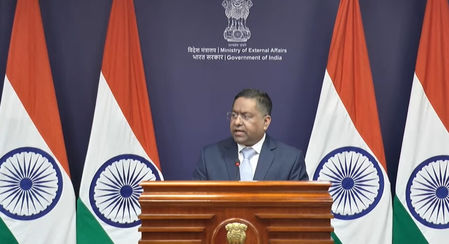
The Ministry of External Affairs (MEA) stated that India is closely observing the evolving scenario in Iran and is committed to safeguarding its citizens. Around 9,000 Indian nationals, including students, business personnel, professionals, pilgrims, and seafarers, currently reside in Iran. In response to the situation, advisories have been issued urging Indian nationals to refrain from traveling to Iran and advising those already there to depart using available means, such as commercial flights.
Protests in Iran, initially sparked by economic challenges like high inflation and currency devaluation, have expanded nationwide with demonstrators voicing dissent and advocating for substantial political and governance reforms. India, on January 5, cautioned its citizens against non-essential trips to Iran due to recent developments and requested Indian residents with visas to register at the Indian Embassy if they had not done so previously.
Addressing reports on India’s alleged exit from the Chabahar Port project, MEA spokesperson Randhir Jaiswal clarified that discussions with the US are ongoing following a sanctions waiver extension until April 26, 2026. Despite the US revoking certain sanctions exceptions in 2024, India remains involved in the development and operation of the Shahid Beheshti terminal at Chabahar Port, crucial for facilitating Indian trade access to Afghanistan and Central Asia without relying on Pakistan.
