


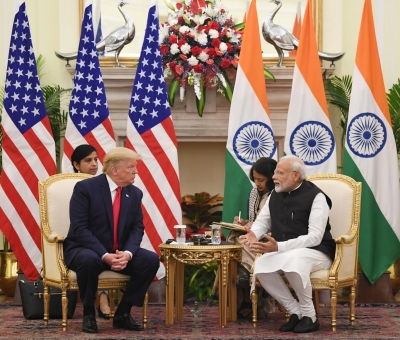
India has achieved tariff relief, improved market access, and a stronger competitive position in the United States through a new interim trade framework announced by Washington and New Delhi. The two countries have agreed on a framework for an Interim Agreement focused on reciprocal and mutually beneficial trade, paving the way for a comprehensive US-India Bilateral Trade Agreement initiated by President Donald Trump and Prime Minister Narendra Modi.
This milestone framework aims at promoting balanced trade and delivering tangible outcomes. India stands to benefit from reduced tariffs, specific sector access, and the removal of longstanding trade barriers. The United States will impose an 18 percent reciprocal tariff rate on Indian goods, covering various sectors like textiles, apparel, leather goods, plastics, chemicals, home decor, artisanal products, and certain machinery.
The uniform tariff rate places India in a favorable position compared to neighboring countries and the broader region, many of which encounter higher trade barriers or less predictable US market access. Additionally, this 18 percent rate narrows the gap with Europe’s 15 percent tariff, enhancing the competitiveness of Indian products in sectors such as textiles, apparel, leather goods, chemicals, and engineering items.
Furthermore, the framework outlines a pathway for the elimination of tariffs on a wide array of Indian goods, contingent on the successful conclusion of the Interim Agreement. Sectors like generic pharmaceuticals, gems, diamonds, and aircraft parts, where India holds a significant global market share and US demand is robust, are included in this list.
