


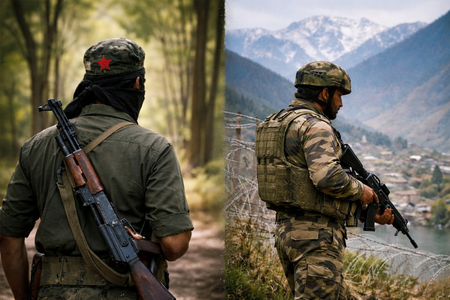
India has witnessed a significant decrease in two major internal security challenges, Left Wing Extremism (LWE) and militancy in Jammu and Kashmir, over the past 12 years. This decline is attributed to sustained security operations, improved intelligence coordination, and development-focused interventions. The report highlights a notable reduction in the geographical spread and operational capabilities of Maoist groups involved in Naxalism.
Security forces have successfully neutralized top Maoist leaders, disrupted key logistical networks, and restricted the movement of insurgents by implementing intelligence-driven targeted operations. The use of technology, better coordination between state police and central agencies, and the establishment of security camps in remote areas have all contributed to diminishing the mobility and strike capacity of Maoist cadres.
In addition to security measures, the government’s emphasis on development initiatives in LWE-affected regions has played a crucial role in integrating tribal areas into mainstream society. Improved infrastructure, mobile connectivity, banking services, and welfare programs have weakened the support base of Maoist groups. Surrender and rehabilitation policies have also encouraged Maoist members to lay down arms, further aiding in the decline of extremism.
The report also notes a gradual weakening of militancy in Jammu and Kashmir, thanks to enhanced security measures and policy implementations over the past decade. Better coordination among security forces has led to more effective counter-terror operations. Efforts to dismantle terror ecosystems, curb cross-border infiltration, and disrupt recruitment channels have significantly impeded the operational capabilities of militant outfits.
The reduction in large-scale attacks and improved stability indicators in the region reflect the success of these combined security and development strategies. While there have been positive signs of civilian life, tourism, and governance revival, the report cautions about the presence of sporadic incidents and residual threats in the region.
