


The Union Ministry of Home Affairs introduced ‘PRAHAAR,’ India’s inaugural national counterterrorism policy and strategy, emphasizing a zero-tolerance stance against terrorism. This comprehensive framework outlines India’s robust anti-terrorism approach, past actions, and future strategies. Over the years, India has faced terrorist threats from across the border and Jihadi groups, leading to various attacks within the country.
With the implementation of PRAHAAR, India aims to confront terrorist proxies and their supporters head-on, showcasing a new aggressive stance in dismantling terror networks and neutralizing sleeper cells. Recent anti-terror operations in Jammu and Kashmir and Tamil Nadu exemplify this strategic shift. In Kishtwar, a top Jaish-e-Mohammad commander was eliminated, while an ISI-backed sleeper cell was dismantled in Tamil Nadu.
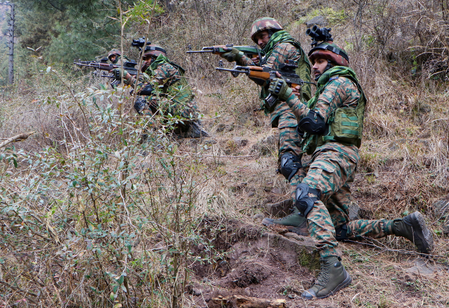
The security forces’ operations in Kishtwar demonstrated India’s advanced military capabilities in combating terrorism effectively. Utilizing intelligence gathering and drone surveillance, the forces successfully neutralized terrorists, signaling a significant strategic change in anti-terror tactics. In Tamil Nadu, operatives of ISIS were apprehended, revealing the sinister intentions of ISI’s hybrid warfare strategy.
The newly introduced national counter-terrorism policy emphasizes proactive prevention, proportionate response, capacity aggregation, rule of law, targeting the terrorist ecosystem, international cooperation, and recovery and resilience. This marks a shift towards a more structured and proactive approach to counterterrorism, focusing on intelligence-led preemptive actions, standardized anti-terror mechanisms, legal redressal, financial sponsor crackdown, international collaboration, and rapid recovery strategies.
