


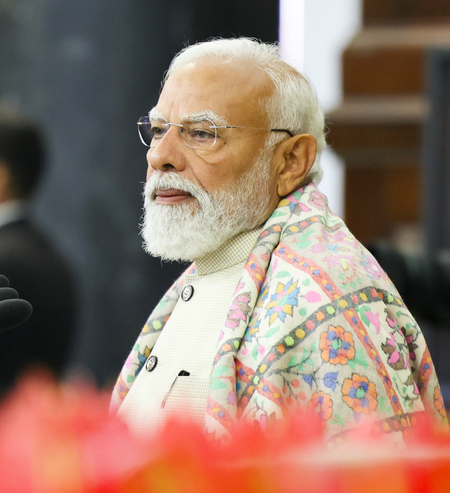
Under Prime Minister Narendra Modi’s leadership, Indian Railways has played a crucial role in fostering infrastructure-led development in Eastern and Northeastern India. Northeast Frontier Railway (NFR) Chief Public Relations Officer Kapinjal Kishore Sharma highlighted the significant progress in West Bengal’s railway infrastructure over the past decade. The region has witnessed a remarkable transformation, moving towards modern and integrated railway systems from its previous limitations of geography and outdated infrastructure.
The Amrit Bharat Station Scheme has been at the core of this transformation, marking the world’s largest railway station redevelopment initiative. More than just a modernization program, the scheme symbolizes a forward-looking approach to national railway infrastructure. With a focus on outcomes and infrastructure enhancement, the scheme aims to revamp over 1,300 stations nationwide, prioritizing modern amenities, accessibility for Divyangjan individuals, digital systems, and architecture reflecting local heritage.
The redevelopment efforts under the Amrit Bharat Station Scheme extend beyond superficial changes, aiming to create contemporary and regionally relevant railway hubs that enhance the overall passenger experience. By reimagining stations as dynamic public spaces and economic drivers, the scheme not only boosts regional commerce but also elevates the quality of rail travel for passengers. West Bengal has emerged as a prime example of passenger-centric rail modernization, witnessing improvements in safety, accessibility, and mobility across the state.
West Bengal’s participation in the Amrit Bharat Station Scheme is notable, with 101 stations earmarked for redevelopment at an investment of approximately Rs 3,600 crore. The redevelopment projects span various locations, including metropolitan centers, border areas, and pilgrimage sites, fostering balanced and inclusive regional development. Major stations like Howrah, Sealdah, and New Jalpaiguri are undergoing upgrades to align with the modernization vision, with a focus on enhancing connectivity and catalyzing economic activities in the region.
Noteworthy projects include the transformation of New Jalpaiguri into a modern gateway to the North-East, Santragachi evolving into a key multi-modal hub, and comprehensive upgrades at Asansol and Shalimar to bolster long-distance connectivity and regional economic growth. The emphasis on passenger amenities is evident through the installation of lifts, escalators, and Wi-Fi connectivity at numerous stations, emphasizing accessibility and operational efficiency improvements.
The Northeast Frontier Railway (NFR), headquartered in Maligaon, operates in the Northeastern states, seven districts of West Bengal, and five districts of north Bihar, contributing significantly to the region’s rail connectivity and development.
