


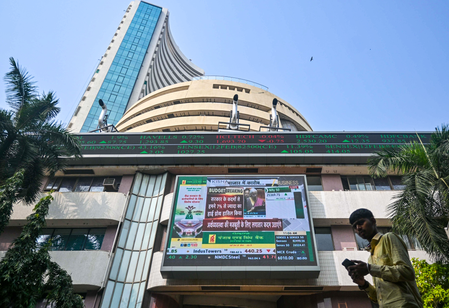
The Indian stock market closed the week on a weak note, facing its fifth consecutive week of losses. Factors such as rising crude oil prices, a weakening rupee, and escalating tensions in the Middle East have dampened investor confidence. Both benchmark indices, Sensex and Nifty, experienced significant declines of over 2% each on Friday. The Sensex dropped 1,690 points to 73,583, while the Nifty fell 487 points to 22,819.60.
Market experts are closely watching the Nifty’s technical outlook, highlighting that a decisive breakdown below the 22,700–22,500 range could intensify selling pressure, potentially pushing the index towards the 22,000–21,744 zone, which corresponds to the 52-week low region. Analysts have identified the 23,000–23,100 range as immediate resistance, with a stronger supply zone at 23,300–23,500.
The broader markets, including midcap and smallcap indices, also ended lower, reflecting the prevailing pressure. Geopolitical tensions in the Middle East are a significant worry for global markets, with uncertainties surrounding potential negotiations between the United States and Iran keeping investors cautious. The surge in Brent crude oil prices above $112 per barrel, amid the ongoing conflict, is adding to market concerns.
The spike in oil prices poses a particular challenge for India, a major importer heavily reliant on imports, as it can lead to inflationary pressures and widen the trade deficit. Additionally, the Indian rupee has weakened, breaching the 94 mark against the US dollar. Meanwhile, the demand for safe-haven assets has driven up gold and silver prices, with both metals witnessing a more than 3% increase on Friday, indicating investors’ preference for safe assets amid global uncertainties.
