


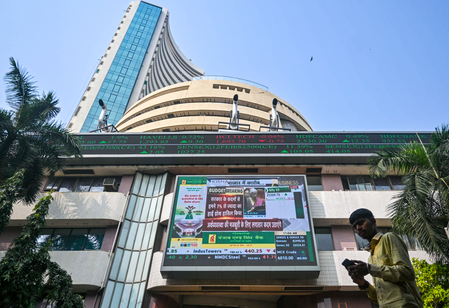
The Indian stock markets saw a significant recovery last week following six weeks of decline, driven by positive global cues. Investor sentiment was positive, buoyed by hopes of a temporary US–Iran ceasefire, although uncertainties in geopolitics limited the pace of gains. Broader markets outperformed benchmarks, supported by a stable domestic macro environment. Ajit Mishra from Religare Broking Ltd noted that despite volatility, indices trended upwards.
The Nifty and Sensex surged by approximately 6% to close near the week’s peaks at 24,050.60 and 77,550.25, respectively. Analysts highlighted the impact of global events, such as the US-Iran ceasefire, which boosted risk appetite but left concerns about its sustainability. Additionally, a significant drop in crude oil prices below $100 alleviated domestic worries and spurred a strong market rebound.
Domestically, the RBI maintained the repo rate at 5.25% and adopted a neutral stance, emphasizing the importance of balancing inflation risks with growth support. The central bank revised India’s GDP growth forecast for FY26 to 7.6% and projected a growth rate of 6.9% for FY27. Inflation estimates for FY27 were raised to 4.6%, citing risks from high energy prices and potential weather-related disruptions.
Market experts observed a cautious yet balanced sentiment influenced by global cues, crude oil price fluctuations, and foreign investor activities. While the downside risks seem contained, upward momentum remains limited, indicating a tentative and unconvincing recovery. Economic indicators reflected a slowdown, with the Services PMI easing to 57.5 and the Composite PMI to 57.0 in March. Despite this, global agencies like the World Bank raised India’s growth prospects, attributing it to robust domestic demand and structural factors.
