


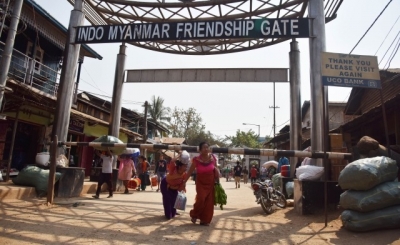
India’s approach towards Myanmar has been cautious, influenced by security, strategic, and economic factors, as well as the aim to counterbalance China’s rising influence in the region. Despite this, a report highlights a different scenario driven by borderland communities and interconnected local economies. In Mizoram, India’s response to cross-border influx from Myanmar’s Chin State has been compassionate, reflecting deep ethnic and cultural ties between the Mizo people and Chin communities.
The state government in Mizoram has provided shelter to thousands of refugees, contrary to the central government’s directive to restrict such movements. The Mizo people and Chin communities share a common ethnolinguistic background, leading to significant support from local organizations and church groups. The influx of displaced families into border districts like Lawngtlai and Zokhawthar has intensified due to the unrest in Chin state, with Mizoram extending aid not just as humanitarian assistance but as a duty towards a shared historical and identity-linked community.
The intricate relationship between India and Myanmar goes beyond cultural bonds, extending to deeply interconnected local economies. States like Mizoram and Manipur have long relied on designated trading points for economic sustenance, with small traders and households heavily dependent on informal and semi-formal trade routes. The borderlands between India and Myanmar not only depict a crisis narrative but also showcase the potential for evolving relationships beyond traditional diplomatic channels.
According to the researcher, Ophelia Yumlembam, understanding the dynamics of border communities and local realities is crucial for India to maintain a responsive and forward-looking engagement with Myanmar. Recognizing the significance of these connections and integrating them into future policy frameworks will play a pivotal role in shaping bilateral relations, especially with local ethnic armed groups now controlling bordering states in Myanmar.
