


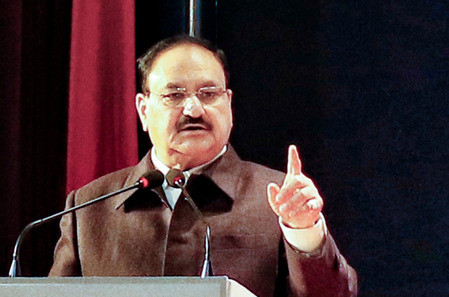
India’s Health Minister JP Nadda emphasized the country’s progress in public health, stating that it has entered a crucial phase focused on results. Speaking at the Advancing Public Health Outcomes Forum 2025 in New Delhi, Nadda highlighted the role of strong science, efficient delivery, and public involvement in this journey.
Nadda praised the national efforts that have led to significant advancements in disease control, expanded immunization coverage, and enhanced institutional and scientific capabilities. He emphasized that the progress in disease control and immunization is a testament to institutional strength, public participation, and unwavering political support.
Furthermore, Nadda reiterated the government’s dedication to bolstering primary healthcare by aiming to establish one Ayushman Arogya Mandir (AAM) for every 2,000 individuals. He mentioned that the government is striving for National Quality Assurance Standards (NQAS) certification for all AAMs, with over 30,000 AAMs already certified.
Highlighting achievements in malaria control, Nadda noted a substantial decrease in malaria incidence and fatalities. He also pointed out a decline in tuberculosis cases, with India surpassing global trends by achieving a 21% reduction in TB incidence. Additionally, Nadda highlighted the positive impact of the Ayushman Bharat Pradhan Mantri Jan Arogya Yojana in reducing out-of-pocket healthcare expenses for families.
During the event, the Health Minister released four key reports showcasing India’s progress in malaria elimination, challenges in tuberculosis control, efforts to eliminate Lymphatic Filariasis, and the utilization of immunization for improved health outcomes.
