


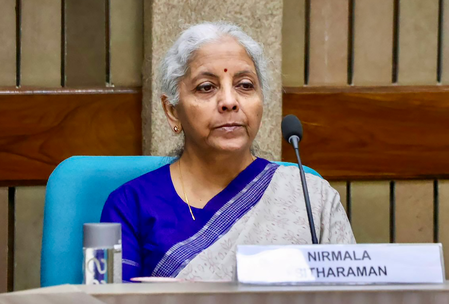
India’s Finance Minister Nirmala Sitharaman stated that India’s solid fiscal position and substantial foreign exchange reserves give the Reserve Bank of India more leeway in policymaking. Speaking at the National Institute of Public Finance and Policy’s golden jubilee celebrations, she emphasized the country’s fiscal space to sustain government spending, potential for rate cuts by the RBI, and ability to provide targeted assistance to affected sectors, all attributed to a decade of fiscal prudence.
Sitharaman’s remarks precede the upcoming monetary policy review by the RBI scheduled for Wednesday. She also pointed out that India maintains one of the lowest debt-to-GDP ratios globally, with projections from the International Monetary Fund indicating a further decrease by 2030. The substantial foreign exchange reserves, adequate to cover imports for up to 11 months, act as a buffer against external economic shocks, she added.
Highlighting the benefits of prudent fiscal management, Sitharaman mentioned specific measures taken by the government, such as excise duty reductions on fuel products and targeted exemptions for critical petrochemical items and SEZ operations. These steps aim to mitigate the impact of rising global petroleum prices due to the West Asia conflict, which she described as a significant challenge in the current volatile and uncertain global economic landscape.
The Finance Minister expressed concerns about the West Asia conflict’s impact on global economic stability, particularly on inflation and currency pressures. Given the potential complications in the inflation outlook due to rising crude prices, she acknowledged the increased complexity in policy decisions. The RBI’s monetary policy committee commenced its review meeting on Monday to deliberate on the upcoming monetary policy actions to be announced later in the week.
