


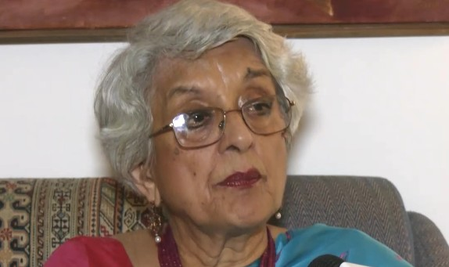
Former High Commissioner of India to Bangladesh, Veena Sikri revealed that Iran invited US Vice-President J.D. Vance to participate in peace talks in Islamabad due to his anti-war stance. She described Pakistan’s role in organizing the talks as orchestrated by the US. The ceasefire agreement between the US and Iran was a response to global concerns about the potential closure of the Strait of Hormuz.
Peace negotiations between US and Iranian representatives are currently ongoing in Islamabad, facilitated by Pakistan’s Prime Minister Shehbaz Sharif. Sikri highlighted previous talks held in Muscat in February, mediated by Omani Foreign Minister Badr bin Hamad Al Busaidi. Despite a reported breakthrough in the earlier discussions, Iran’s mistrust towards the US and Israel’s actions have complicated the current dialogue.
Sikri emphasized the significance of US Vice-President Vance’s involvement in the talks, citing his reputation for opposing war. While direct discussions between Washington and Tehran have not commenced, there is hope for potential negotiations in the future. Reports suggest that Pakistan’s role in the ceasefire announcement was closely coordinated with the US, raising questions about the nature of their involvement.
Iran’s demand for the release of frozen assets in exchange for access through the Strait of Hormuz, a request later denied by the US, indicates ongoing negotiations. Sikri pointed out that Iran’s participation in the talks is contingent on Israel halting its attacks on Lebanon. The possibility of Israel disrupting the peace process due to unmet objectives, such as regime change in Iran, remains a concern.
