


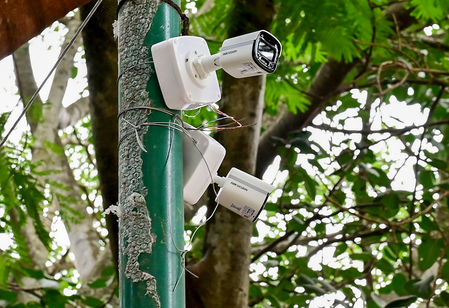
The recently uncovered espionage module, allegedly supported by the ISI, had been conducting surveillance on critical sites like naval bases and airport areas in Mumbai. The group’s plan involved installing solar-powered CCTV cameras at these locations to transmit live feeds to handlers in Pakistan.
Authorities revealed that the module’s activities were not confined to specific regions but extended to places like Delhi, Ghaziabad, Punjab, Jammu and Kashmir, and even Maharashtra. The prime suspect, Suhail Malik, who posed as a bakery worker, was actually on the ISI’s payroll and had shared information about sensitive spots in Pune and Mumbai while residing in Pune.
Malik, who later moved to Ghaziabad, led the espionage module responsible for setting up solar-powered CCTVs at various public spots, including railway stations. Investigations are now underway to scrutinize the group’s actions in Mumbai and Pune, where Malik had spent five years conducting reconnaissance and gathering intelligence for the ISI.
The targets of this module primarily focused on Army cantonments, railway stations, and security personnel movements, with a particular interest in Indian Railways. While the module’s role was limited to gathering information, the ISI was reportedly planning to establish another unit for potential attacks on railway stations and Army areas.
Officials emphasized that the module’s surveillance network, aimed at providing low-cost information to facilitate future attacks, had been in operation for years. The recent exposure of this espionage ring has prevented a significant security threat, averting potential catastrophic incidents across multiple locations.
Following the module’s dismantling, the Maharashtra government has initiated a review of CCTV systems and halted the procurement of cameras from Chinese companies. Additionally, authorities in Mumbai now require police clearance before installing surveillance systems, reflecting heightened security measures in response to the espionage activities.
An Intelligence Bureau official highlighted the extensive reach of the module, stressing the need for coordinated efforts among state police forces to gather comprehensive information. The official also underscored the importance of understanding how the collected data was intended to be utilized by the ISI, emphasizing the broader implications of the espionage operation.
