


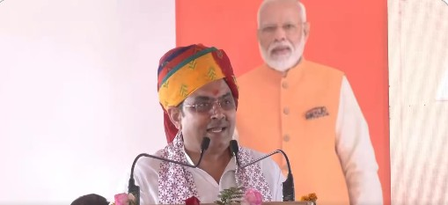
Prime Minister Narendra Modi announced the approval of Phase-2 of the Jaipur Metro, signaling a significant move towards sustainable urban development. This project aims to enhance connectivity, reduce congestion, and improve the quality of life in Jaipur.
Rajasthan Chief Minister Bhajan Lal Sharma expressed gratitude towards PM Modi and the Union Cabinet for greenlighting this ambitious Metro project. The development is expected to inject fresh momentum into Jaipur’s growth trajectory.
The 41-km-long North–South corridor of the Jaipur Metro, with an estimated cost of Rs 13,037.66 crore, will play a vital role in the city’s infrastructure. Featuring 36 stations, this corridor will connect key areas from Sitapura to Vishwakarma Industrial Area, contributing to the vision of a “Developed Rajasthan.”
The project, approved by the Union Cabinet and to be executed by Rajasthan Metro Rail Corporation Limited (RMRCL), will establish crucial links to major hubs like Sitapura Industrial Area, Jaipur Airport, and Sawai Man Singh Hospital. It will also seamlessly integrate with the existing Phase-1 Metro line, enhancing the city’s public transport network.
Jaipur’s Phase-1 Metro line currently serves around 60,000 daily passengers, and Phase-2 is expected to significantly boost ridership. This expansion aims to promote public transport usage and reduce dependency on private vehicles, aligning with sustainable transport goals.
The Jaipur Metro Phase-2 project has passed various appraisal stages and exhibits strong economic viability, with an Economic Internal Rate of Return (EIRR) exceeding 14 percent. Funding for the project will be sourced through equity contributions, subordinate debt, and multilateral financing, in line with the Metro Rail Policy, 2017.
In line with Rajasthan’s Transit-Oriented Development Policy-2025 and national sustainable transport objectives, the project is slated for completion by September 2031. Once operational, it is projected to alleviate congestion, lower emissions, and enhance mobility for residents, workers, and visitors, positioning Jaipur as a modern and future-ready city.
