


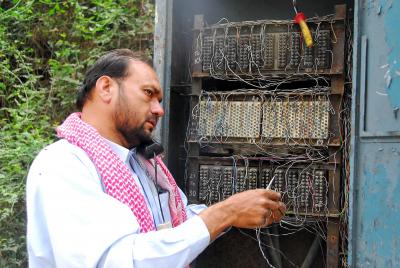
The introduction of 5G services in certain areas of Pakistan marks a significant achievement, but the country’s financial and infrastructural limitations pose obstacles to the technology’s effective implementation, as per a recent report. The report highlighted Pakistan’s deficiency in the necessary physical infrastructure for transmitting 5G signals, particularly the network linking cell sites to the core.
Globally, fiber-optic cable is the preferred choice, capable of transmitting terabits per second with minimal latency. For 5G standalone networks, a backhaul bandwidth exceeding 10 Gbps per site and round-trip times under 5 milliseconds are crucial. However, only about 15% of cell sites in Pakistan are connected via fiber, while the remaining 85% rely on microwave radio links with fixed capacity limits that deteriorate in adverse weather conditions and are inadequate for 5G traffic demands.
A recent spectrum auction in Islamabad saw the sale of 480 megahertz of spectrum for $507 million, nearly tripling the usable spectrum. Despite being hailed as a breakthrough, the auction is just the initial phase of a challenging and lengthy process, the report emphasized. Upgrading a single site to fiber incurs costs ranging from $10,000 to $20,000, far surpassing the funds raised in the auction, with tens of thousands of sites requiring upgrades.
Pakistan’s fee structure for Right-of-Way imposes annual charges of PKR 35 to PKR 60 per meter, unlike India’s one-time fee system, transforming a one-time capital expenditure into a perpetual operational burden, thus deterring investments. Consequently, Pakistan ranks 76th out of 93 economies on the GSMA Fiber Development Index, with the report cautioning that without reforms, fiberization will continue to impede the country’s 5G deployment.
In addition to infrastructure challenges, Pakistan faces a demand-side issue, with only 1% of handsets in the country supporting 5G. The report highlighted that approximately 90% of locally assembled devices are currently limited to 2G or 3G compatibility, further complicating the 5G transition.
