


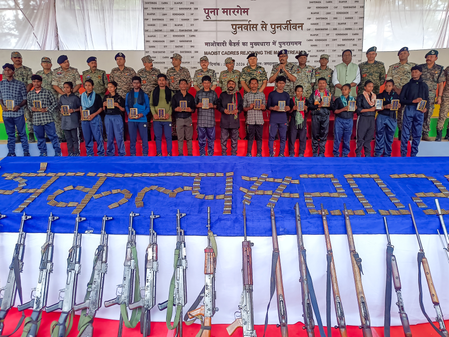
Maoist insurgents, despite resource limitations, had long advocated for armed revolution against the state, allegedly with support from the Congress regime and urban intelligentsia. Recent data presented by Union Home Minister Amit Shah in Parliament debunked the belief that rural poverty fueled Maoism, revealing that Naxalbari had higher per capita income than non-affected regions like Saharsa in Bihar during the 1960s.
The movement’s ideological foundation, inspired by Communist China’s Mao Zedong, aimed to establish a People’s Democratic Republic through armed insurgency. This uprising in Naxalbari and subsequent Maoist activities across India led to the emergence of the Naxalite insurgency, affecting 70% of the country and claiming over 20,000 lives, including many security personnel.
Contrary to the myth of supporting the local economy, investigations exposed that Naxals collected an annual “tax” of Rs. 240 crore from the public. They resorted to violence, including bomb blasts and armed attacks, hindering development efforts and terrorizing communities. The government’s strategic measures, including a mix of forceful actions and rehabilitation policies, have significantly curbed Naxal activities, leading to a substantial decline in affected districts and the neutralization of top leadership.
