


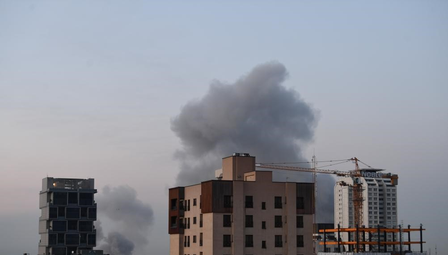
The Asian Development Bank’s latest report warns that the ongoing conflict in the Middle East is escalating global geopolitical risks and increasing economic uncertainties for developing Asia and the Pacific. The report projects a potential slowdown in regional growth to 5.1% in 2026 and 2027 under an early stabilization scenario, down from 5.4% in 2025.
If the disruptions in the Middle East persist until the third quarter of 2026, the growth rate could further decline to 4.7% in 2026 and 4.8% in 2027. ADB’s chief economist, Albert Park, highlighted that higher energy prices would elevate production costs and consumer prices, while export growth is expected to normalize after last year’s front-loading ahead of US tariff hikes.
Under the early stabilization scenario, inflation is forecasted to reach 3.6% in 2026 and 3.4% in 2027, up from 3% in 2025. However, if tensions in the Middle East continue through the third quarter of 2026, inflation could surge to 5.6% this year. The report emphasizes that despite limited direct trade exposure to the Middle East, developing Asia and the Pacific remain susceptible to spillovers through global energy markets, trade networks, and financial conditions.
The conflict in the Middle East has significantly heightened global geopolitical risks, potentially leading to further increases in energy prices, inflation, and economic strain across the region. Persistent disruptions could exacerbate the situation, impacting growth negatively. Additionally, any sudden tightening in global financial conditions, new tariff escalations, or trade uncertainties could disrupt supply chains and weaken external demand, as outlined in the report.
