


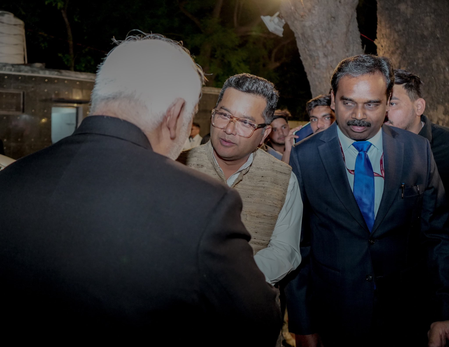
Minister of State for External Affairs, Pabitra Margherita, extended condolences on behalf of the Union government at the 40th-day mourning ceremony (Chehlum) hosted by the Embassy of Iran in New Delhi. Chehlum, a significant observance in Shia tradition, signifies the 40th day after a passing, involving solemn reflection, prayers, and remembrance. MoS Margherita’s presence emphasized India’s deep respect for Iran’s cultural and religious sentiments during this mourning period.
In a statement shared on social media platform X by the Ministry of External Affairs, it was noted that India–Iran relations are deeply rooted in age-old civilisational, cultural, and people-to-people ties spanning thousands of years. The two ancient civilizations share a rich common heritage, with linguistic similarities between Sanskrit and Avestan, historical trade routes connecting the Indus Valley with ancient Persia, and centuries of cultural exchange through art, architecture, literature, and Sufi traditions fostering an enduring bond.
The relationship between India and Iran, established formally in 1950, predates Independence by millennia, with shared elements in philosophy, cuisine, music, and festivals continuing to strengthen these bonds today. The participation of an Indian Minister of State in the Chehlum ceremony underscores New Delhi’s dedication to nurturing this historic friendship. Pabitra Margherita, assuming office as the Minister of State for External Affairs in June 2024, has been actively involved in advancing India’s diplomatic outreach, with his gesture at the Iranian Embassy conveying a message of solidarity and empathy during this sensitive time.
Such gestures of condolence and involvement in significant cultural observances contribute to reinforcing the warm and multifaceted partnership between India and Iran. The collaboration between the two nations spans various areas, including trade, energy, connectivity projects like Chabahar Port, and cultural exchanges. This solemn participation reaffirms India’s longstanding tradition of respecting the cultural and religious practices of its global friends and partners.
