


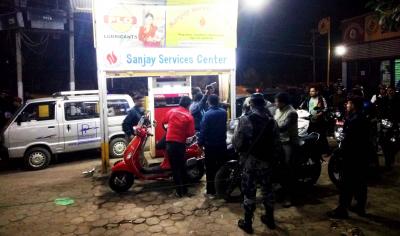
The new government in Nepal has decided to grant partial tax exemptions on petroleum products to alleviate the financial burden on consumers. A 50% exemption on customs duties and infrastructure tax for petrol, diesel, and kerosene was approved during a Cabinet meeting. Minister for Federal Affairs and General Administration Pratibha Rawal stated that this decision will be officially published in the Nepal Gazette.
Currently, petrol in Nepal is subjected to a customs duty of NPR 25.23 per liter, while diesel incurs a tax of NPR 12.02 per liter, along with an infrastructure tax of NPR 10 per liter. The government also imposes various additional levies, including Value-Added Tax (VAT), road maintenance tax, price stabilization fund charges, pollution tax, and green tax.
Due to disruptions in oil supply at the Strait of Hormuz, a vital passage for global oil transportation, caused by tensions involving the United States, Israel, and Iran, international oil prices have risen. This surge has led to increased transportation and insurance costs, impacting the prices of goods reliant on transportation. Asian countries, heavily dependent on oil imports from the Gulf region, have been significantly affected by this disruption.
Nepal, despite not directly importing petroleum products from the Gulf or other regions, relies entirely on India for refined fuel. However, India itself faces challenges in fuel imports and recently reduced excise duties on petrol and diesel. In the previous fiscal year, Nepal imported petroleum products worth NPR 288 billion, with fuel being the country’s primary import item.
