


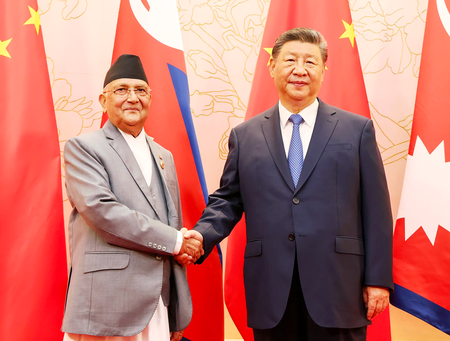
With the recent change in political leadership in Kathmandu and China facing strategic constraints in its engagement with Nepal, there is optimism that the strengthened democratic institutions in Nepal will help the people understand China’s expansionist goals in the region. The latest parliamentary elections in Nepal, following last year’s Gen Z-led protests, saw a significant shift in the country’s political landscape, with the Rastriya Swatantra Party (RSP) led by Balen Shah securing a majority in the 275-member House of Representatives, signaling a departure from traditional political parties.
China’s efforts to leverage Nepal as a strategic asset in South Asia have been evident in recent years. A pivotal moment came in 2017 when China played a role in uniting Nepal’s communist parties, leading to the appointment of K P Sharma Oli as Prime Minister. However, the formation of a new government under Prime Minister Balen Shah is seen as a setback to China’s Nepal policy, potentially limiting its influence in the region.
The diminishing political influence of communist parties in Nepal is expected to impede China’s attempts to promote communist ideologies in South Asia. The defeat of key communist leaders, including Oli, not only reflects public discontent but also signals a resistance to China’s interference in Nepal’s internal affairs. This resistance extends across political parties, civil society, and media in Nepal.
China’s endeavors to strengthen military ties with Nepal and establish military dependencies face challenges with the new political leadership in Kathmandu. Prime Minister Shah’s background in the Madhesi region, with close ties to India’s Bihar state, and his extensive time in India suggest a potential for stronger bilateral relations with India during his tenure, which could further complicate China’s interests in the region.
