


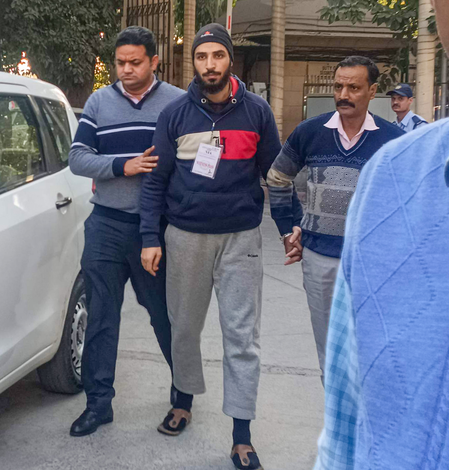
The recent discovery of various terror modules in India has uncovered a new trend. These modules do not align with a single group but consist of individuals inspired by different terrorist organizations. For instance, members of the Faridabad module were associated with Jaish-e-Mohammad but shared the ideology of the Islamic State.
Authorities apprehended two individuals with ties to both the Islamic State and Jaish-e-Mohammad in a recent case. An Intelligence Bureau official highlighted a concerning shift where module members are no longer exclusively linked to one group but draw inspiration from various terror outfits. This development indicates a dangerous pattern of individuals autonomously forming terror groups.
In light of India’s strong anti-terror stance post the Pahalgam attack, Pakistan seems to avoid direct involvement in establishing terror cells. Instead, it leverages individuals in Pakistan, not directly affiliated with terror groups, to disseminate propaganda on social media. This strategy aims to encourage self-creation of terror groups.
Following Operation Sindoor, a surge in propaganda by Pakistani social media accounts has been observed. This tactic mirrors the long-standing approach of the Islamic State. The dissemination of such content attracts susceptible youth, fueling their aspirations to establish terror groups with like-minded individuals.
Instances abound where self-inspired youth have attempted independent actions. Propaganda materials, such as Jihadi literature, are initially circulated on social media or encrypted messaging platforms. Subsequent networking among individuals who consume this material similarly paves the way for the formation of terror modules.
Notably, most terror incidents, excluding those in Jammu and Kashmir, have been attributed to self-inspired terror modules. Individuals like Jamesha Rubin and Mubeen, who acted independently, adhered to the Islamic State ideology. The Rameshwaram Cafe blast in Bengaluru in 2024 was orchestrated by Islamic State-inspired terrorists Mussavir Hussain and Abdul Mateen Talha.
Investigations have revealed that these incidents were self-inspired, with no direct links among the perpetrators. The common thread connecting them is their self-inspired nature and adherence to a shared ideology. The ISI’s new strategy allows recruits to select their preferred terror group without coercion, enhancing deniability and cost-effectiveness.
