


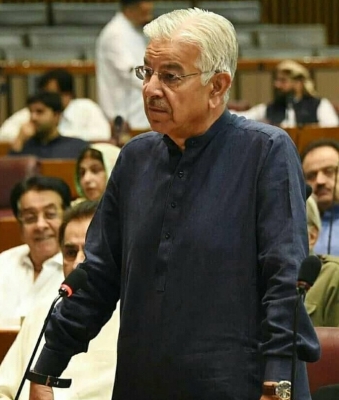
India’s security agencies are closely analyzing Pakistan’s Defense Minister Khawaja Asif’s recent remarks, where he mentioned Kolkata. Asif cautioned that if India engages in a ‘false flag operation,’ Pakistan’s response could reach Kolkata. A false flag operation is a covert action meant to appear as if carried out by another party, often used to justify retaliation or manipulate public opinion.
Experts interpret Asif’s statements as a defensive stance while portraying India as the aggressor. India’s stance on Pakistan is clear: any cross-border terror attack will be seen as an act of war. The official emphasized that India will engage in dialogue with Pakistan once they close down their terror facilities.
Asif’s reference to Kolkata should be seen in the context of ongoing elections in West Bengal. He is allegedly inciting terror groups like Harkat-ul-Jihad Islami (HuJI) and Jamaat-ul Mujahideen Bangladesh (JMB) to disrupt the election process. Intelligence reports suggest that groups like JMB and HuJI are planning terror attacks in West Bengal and Assam.
Pakistan is reportedly frustrated with the improved ties between India and Bangladesh. Both countries are enhancing cooperation in economic and security matters. Islamabad is allegedly trying to instigate terror groups in Bangladesh to carry out attacks in India, aiming to strain ties between the nations.
Officials suggest that Pakistan is planning a significant move in India, with Kolkata being a focal point. Islamabad is allegedly creating a false narrative of Indian aggression to justify a potential attack in Kolkata. Pakistan is also attempting to build a global narrative against India, portraying New Delhi as the aggressor.
