


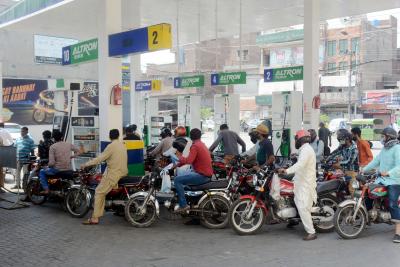
A recent report criticized Pakistan’s government for reducing petrol prices by Rs 80 per liter, calling it a “populist move” driven by economic challenges and political pressures. The initial significant fuel price hike, particularly for petrol and diesel, had a direct impact on inflation, transportation costs, and food prices, the report highlighted. The decision to lower petrol prices was seen as a failure in policy-making, indicating a reactive response to political demands rather than principled governance.
The report emphasized that such short-term policy decisions might not shield the public from future inflation or contribute to a stable economic environment. It pointed out the government’s reliance on broad relief measures, irrespective of income levels, which could lead to inefficient resource allocation in a financially constrained country. The failure to pass on increased global energy prices to consumers has already burdened the exchequer with significant costs, affecting development budgets and potentially impacting low- and middle-income households.
The fiscal gap resulting from subsidizing petrol prices is expected to persist, with implications for higher taxes, reduced public spending, or increased inflation for ordinary citizens. The sudden fuel price adjustments revealed internal confusion and political pressures within official circles, indicating Pakistan’s limited ability to absorb fuel price fluctuations.
