


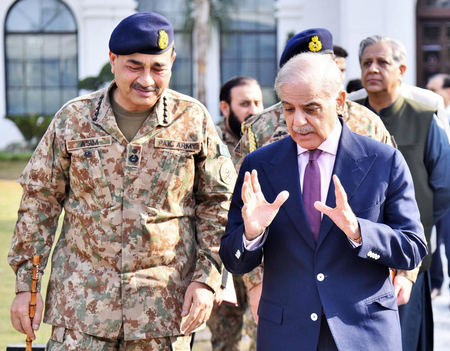
Pakistan has positioned itself as a potential mediator between the United States and Iran amid the West Asia conflict. However, concerns have been raised about Islamabad’s strategy of maintaining ambiguity to stay relevant without fully aligning with any party. This approach, highlighted in a report by Dimitra Staikou, a Greek lawyer and journalist, is seen to weaken Pakistan’s credibility as a stable partner.
Staikou pointed out that Pakistan’s historical relationship with Gulf monarchies has been marked by dependence and strategic ambiguity. While receiving support from countries like Saudi Arabia and the UAE, Pakistan has also refrained from direct military involvement in certain conflicts to maintain flexibility. The report emphasized that despite the critical nature of Pakistan’s ties with Gulf nations, the dependency is asymmetric, with Islamabad relying more on its partners than vice versa.
The report highlighted Pakistan’s shrinking maneuvering space due to economic reliance on Gulf countries and domestic challenges. Recent protests and rising anti-American and Islamist sentiments pose a threat to Pakistan’s traditional approach of balancing outrage with flexibility. The narrative of Pakistan as a neutral mediator is viewed as a way to manage conflicting interests rather than a sign of diplomatic maturity.
Pakistan’s external image is closely linked to its internal situation, which includes economic distress, institutional weakening, and the rise of extremist elements. These factors limit Islamabad’s ability to project a coherent global stance. The report cautioned Western policymakers to assess Pakistan’s reliability as a state actor amidst evolving geopolitics, urging Islamabad to address its internal vulnerabilities for its mediation claims to gain credibility.
