


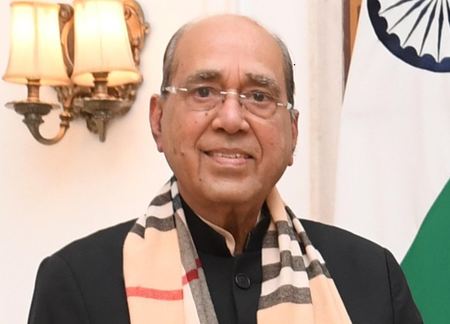
A political controversy has emerged over remarks made by Ram Mandir Construction Committee Chairman Nripendra Misra, suggesting that decisions during critical events like the 1992 Babri Masjid demolition were influenced more by political leaders than bureaucratic officials. Misra highlighted the role of political leadership in crucial moments, citing instances during the tenure of former Chief Minister Kalyan Singh and late Mulayam Singh Yadav. The differing approaches taken by these leaders during crises have sparked debate and differing interpretations.
Uttar Pradesh Minister Jaiveer Singh responded to Misra’s comments, emphasizing the authority of the Chief Minister in decision-making processes. He pointed out that decisions made by political leaders, such as Mulayam Singh Yadav, were paramount and had to be followed by officials, regardless of their personal views. Meanwhile, BJP spokesperson Pratul Shah Deo criticized the actions of the Mulayam Singh Yadav government, labeling them as brutal and an assault on traditional beliefs.
In contrast, Samajwadi Party spokesperson Rajkumar Bhati offered a different perspective, suggesting that the decision to open fire was made at the administrative level. Bhati claimed that Misra had previously acknowledged giving the orders to fire, indicating a disconnect between political decisions and operational actions. He highlighted the role of officials in executing directives and maintaining law and order, emphasizing the nuances of decision-making in crisis situations.
Misra clarified that crucial decisions like these were predominantly political, with limited input from bureaucratic officials. He recounted instances during his tenure under different Chief Ministers, underscoring the significance of political leadership in such matters. The discussion surrounding the Ayodhya firing incidents of 1990 under Mulayam Singh Yadav’s administration has reignited debates on accountability and decision-making processes during tumultuous periods in the nation’s history.
