


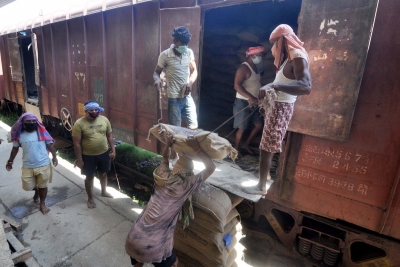
Railways are poised to significantly contribute to India’s economic growth by aiming for a freight capacity of 3,000 million tonnes by 2030, states a report by ASSOCHAM-AESCLA. Currently responsible for about 30% of freight movement, railways show substantial growth potential. Initiatives like Dedicated Freight Corridors and electrification are enhancing efficiency and sustainability in the sector.
The report emphasizes the importance of expanding rail capacity, developing Dedicated Freight Corridors, increasing private sector involvement, and enhancing last-mile connectivity to boost rail modal share. It also stresses the need to reduce logistics costs, currently at approximately 7.97% of GDP, to improve India’s global competitiveness.
Dr. Surendra Kumar Ahirwar, Executive Director (Traffic Commercial) at Railway Board, highlights the ongoing transformation of Indian Railways into a future-ready system. The railways not only support economic growth but also foster it through a vast manufacturing and service ecosystem. Key transformation drivers include safety enhancements, capacity expansion, technology upgrades, AI adoption, and focus on end-to-end logistics solutions with robust first and last-mile connectivity.
Ahirwar notes that Indian Railways has expanded its track network by nearly 31,000 km in the last decade, indicating significant infrastructure growth. Sanjay Bajpai, Advisor at Railways Council, ASSOCHAM, underscores Indian Railways’ shift from a traditional transporter to a pivotal player in enhancing logistics efficiency, industrial competitiveness, and economic expansion. He emphasizes the importance of modern terminals, improved port connectivity, and seamless multimodal integration.
With annual freight loading surpassing 1.6 billion tonnes, the railway sector is set for robust growth, supported by infrastructure enhancements, policy reforms, and digitalization.
