


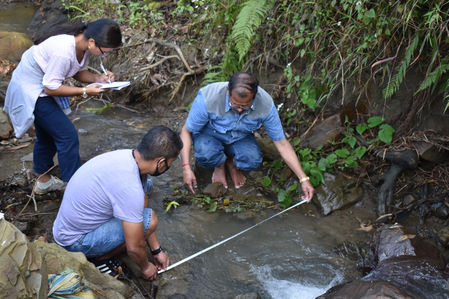
Researchers from Nagaland University and a Nainital varsity have collaborated to analyze environmental changes in Nagaland’s Kohima district using advanced Geographic Information System (GIS) modeling and remote sensing techniques. The study sheds light on the fragile geo-ecological conditions in the Northeast’s hill region, emphasizing concerns over environmental degradation.
The research, co-authored by Dr. Khrieketouno Belho, Prof. M.S. Rawat, and Dr. Pradeep Kumar Rawat, was published in a peer-reviewed journal by Springer Nature. It highlights the region’s high vulnerability to natural hazards and disasters due to continuous seismotectonic activities and landslides.
The study underscores the urgent need to address environmental degradation in the region to prevent severe consequences. By employing an integrated GIS database modeling system, the researchers examined various environmental parameters such as geological structures, land-use patterns, vegetation cover, and climate factors.
Prof. Pradeep Kumar Rawat noted a significant decline in natural landscapes like forests and water bodies over the past two decades, coupled with an increase in built-up areas and agricultural land. The study also observed a rise in average temperatures and a decrease in annual rainfall, signaling rapid environmental transformation in Kohima district.
Dr. Belho emphasized the region’s vulnerability to monsoon hazards and climate change impacts, stressing the study’s international significance in understanding environmental challenges. The research also highlighted the geological fragility of the area, with seismic events contributing to landscape instability and landslides.
University officials highlighted the importance of evidence-based planning and sustainable land management strategies in the Himalayan region. They believe that the research findings will aid in environmental monitoring, climate resilience planning, and sustainable development in the northeastern hill region and the broader Indian Himalayan landscape.
