


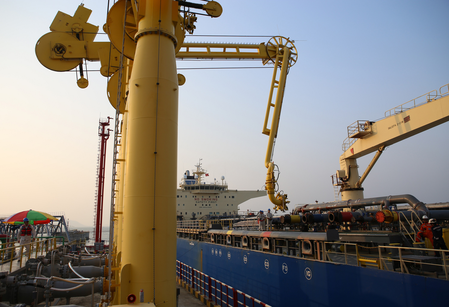
Saudi Arabia has increased the official selling price of its Arab Light crude for May shipments by $19.50 per barrel over the regional benchmark for Asian buyers. This surge in price is attributed to severe disruptions in energy flows through the Strait of Hormuz. The tension is linked to the conflict involving the US, Israel, and Iran, impacting oil shipments from the Persian Gulf.
The heightened tensions have led to a near closure of the key shipping route by Iran, affecting global crude supplies and causing sharp volatility in energy markets. As a result, international oil prices have risen significantly, with Brent crude surging by over 50% in recent sessions. Major economies like the US, Europe, and Asia have experienced a steep increase in fuel prices.
International crude oil prices continued their upward trend, with Brent crude futures rising over 2% to trade above $111 per barrel, close to a 52-week high. Similarly, US West Texas Intermediate (WTI) crude climbed more than 3% to around $115 per barrel. The previous session saw WTI surging over 11% and Brent jumping nearly 8%, marking their largest single-day increases since 2020.
Crude oil remains a significant factor in global markets, with supply concerns dictating market sentiment. Market experts note that US crude is currently trading in the $110–$112 range and faces a crucial resistance level near $115. Analysts predict that the rally could extend towards $10,650–$10,800 and potentially higher. On the downside, immediate support levels are at $10,300–$10,270, with a possibility of cooling towards $10,000. Overall, the market sentiment leans towards buying on dips.
