


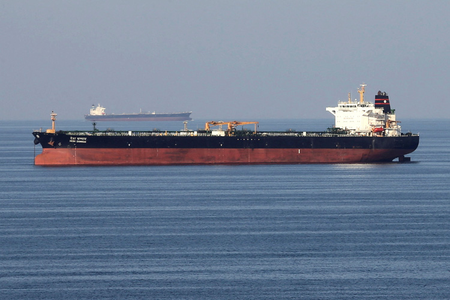
The South Korean government has committed to assisting South Korean vessels stranded in the Strait of Hormuz to navigate the shipping route safely. Efforts are underway by the Ministry of Trade, Industry and Resources in collaboration with the foreign and oceans ministries to facilitate the passage of Korean oil tankers held up in the strait.
Currently, there are seven oil tankers, including four flag carriers, in the area transporting shipments for Korean oil refineries. These vessels collectively hold 14 million barrels of crude oil, equivalent to South Korea’s five-day oil consumption. Additionally, eight other Korean ships, comprising petroleum product carriers, bulk carriers, liquefied gas carriers, a container ship, and a vehicle carrier, are also stuck in the Strait of Hormuz.
Following a two-week ceasefire agreement between the United States and Iran, South Korea’s initiative aims to ensure the safe transit of its vessels through the crucial oil shipping route. This development came after US President Donald Trump announced a temporary halt to strikes on Iran, conditional upon the immediate and complete reopening of the Strait of Hormuz.
Seoul officials are actively monitoring the situation and conditions for passage through the strait, which has faced disruptions due to the ongoing tensions involving the US and Iran. Iran’s Supreme National Security Council clarified that the ceasefire does not signify the end of hostilities, pending negotiations on a 10-point plan that includes key provisions such as US commitments, Iranian control of the strait, and the lifting of various sanctions.
