


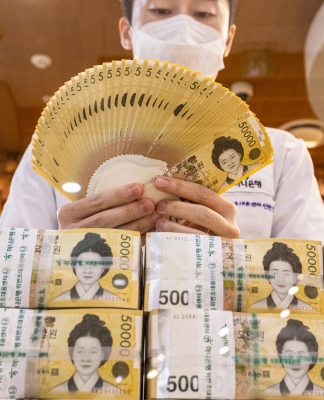
The South Korean currency, the won, dropped to a 17-year low against the US dollar on Tuesday due to concerns over the escalating conflict in the Middle East. Trading at 1,530.1 won per dollar, the won’s decline extended for the fifth consecutive session, hitting its lowest level since March 9, 2009. The Bank of Korea expressed vigilance as foreign investors heavily sold local stocks, leading to the rapid depreciation of the won.
The Bank of Korea’s international department director general, Yoon Kyung-soo, stated that they are closely monitoring the market dynamics. He highlighted the need for caution if the won’s value significantly deviates from other currencies due to one-sided market sentiment. The ongoing Middle East conflict, triggered by US-Israeli strikes on Iran in late February, has kept the won around the critical 1,500 mark in recent sessions.
Amid the conflict, US President Donald Trump’s threat to target key Iranian oil facilities and power plants if a peace deal is not reached soon has heightened tensions. Iran, in response, rejected the US peace proposals as unrealistic and excessive. The escalating conflict has led to a surge in global oil prices, with US crude futures surpassing $100 per barrel for the first time since July 2022, impacting South Korea’s energy-dependent economy.
Higher oil prices have increased the demand for dollars in South Korea, mainly for crude imports, putting pressure on the won. Additionally, heavy foreign selling of local shares has contributed to the currency’s downward trend. The benchmark Korea Composite Stock Price Index (KOSPI) fell significantly on Tuesday, with offshore investors offloading shares worth $2.51 billion, exacerbating the won’s depreciation.
