


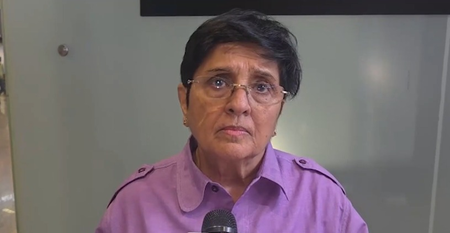
A widespread wave of backing has surfaced nationwide for the Women’s Reservation Bill, with various political leaders and public figures affirming that the proposed law will significantly boost women’s involvement in governance and decision-making processes, while also addressing societal needs from a more inclusive standpoint. Former IPS officer and ex-Lieutenant Governor of Puducherry, Kiran Bedi, speaking in Lucknow, emphasized the transformative impact of the Bill, stating that it would introduce a grassroots-level perspective into policy formation. Bedi highlighted that women’s engagement would lead to more holistic governance, offering a deeper insight into societal challenges.
Uttar Pradesh State Women’s Commission Vice Chairperson Aparna Yadav echoed similar sentiments, emphasizing that the Bill showcases the government’s dedication to women’s empowerment. She noted that the Bill was one of the primary initiatives undertaken in the new Parliament building, symbolizing a strong commitment to empowering women.
In Jaipur, BJP Mahila Morcha President Rakhi Rathore welcomed the proposal to extend the Parliament session for deliberating on the Bill, asserting that it would empower women and significantly enhance their representation in legislative bodies.
Former Deputy Chief Minister of Bihar, Renu Devi, highlighted the broader political implications of the Bill, stressing that increased female representation in Parliament would influence policymaking in favor of women-centric issues. Devi urged all political parties to collaborate during the special session convened by the Prime Minister, emphasizing the importance of unity in supporting this crucial legislation.
In Panchkula, Haryana, BJP leader Banto Kataria expressed optimism about the imminent passage of the Bill, attributing the prioritization of the issue to the leadership of the Prime Minister. Kataria praised the Prime Minister for addressing the Bill on the first day of the new Parliament session, expressing hope for its approval on the 18th and acknowledging the forthcoming era as one that belongs to women.
