


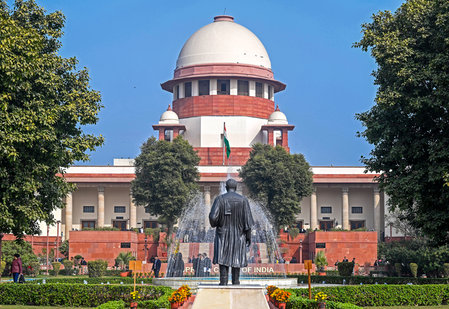
The Supreme Court clarified that using abusive language like “bastard” during a heated argument does not constitute obscenity under Section 294(b) of the Indian Penal Code. Justices Pamidighantam Sri Narasimha and Manoj Misra partially allowed appeals from two individuals convicted in a 2014 case related to a boundary dispute among close relatives in Tamil Nadu. The court emphasized that not all vulgar or abusive expressions lead to legal consequences and that obscenity must involve arousing sexual or lustful thoughts, not just being offensive.
In its ruling, the apex court overturned the conviction of the appellants under Section 294(b) IPC, criticizing the Madras High Court for deeming the abusive language used in the altercation as an obscene act. The case stemmed from a violent incident in 2014 during a family boundary dispute, resulting in a fatality due to a head injury. While one accused was convicted of culpable homicide not amounting to murder under Section 304 Part II IPC, the court reduced the sentence from five to three years of rigorous imprisonment, considering the circumstances.
The Supreme Court highlighted that the assault occurred in the heat of the moment amid a sudden quarrel between relatives, involving a single blow with a wooden log found at the scene. The court also overturned the conviction of another accused for culpable homicide, citing a lack of evidence supporting a shared intention to cause fatal bodily harm. However, the co-accused’s conviction under Section 324 IPC for causing hurt with a weapon was upheld, with the sentence reduced to time already served.
The bench, while partially allowing the appeals, instructed the accused convicted under Section 304 Part II IPC to surrender and serve the remaining reduced sentence.
