


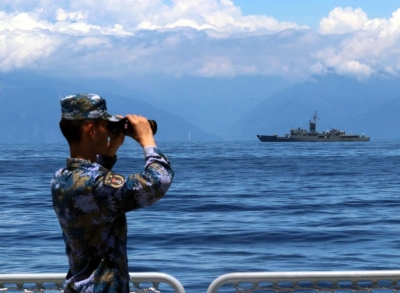
Taiwan is facing challenges in safeguarding its democratic values amidst ongoing threats from the Chinese Communist Party (CCP). To counter this, experts suggest adopting a strategy of “self-deterrence” to raise the costs of any potential aggression by Beijing. This approach aims to protect Taiwan’s democracy and ensure its survival without resorting to militarism or provocation.
The CCP’s threats to Taiwan are tangible and include military intimidation, cyberattacks, and disinformation campaigns. Chinese fighter jets frequently breach the Taiwan Strait’s median line, undermining regional stability. Through cyber intrusions and disinformation efforts, Beijing seeks to weaken public trust in Taiwan’s institutions.
It is crucial for Taiwan to develop its own deterrent capabilities as relying solely on external support may not be sufficient. While Taiwan’s democratic achievements are commendable, history has shown that without credible deterrence, democracies are vulnerable to external aggression. The report emphasizes that legitimacy and vibrancy alone do not guarantee security; the capacity to resist is essential.
Taiwan’s unique geography and society offer advantages for asymmetric defense. Its mountainous terrain, urban centers, and narrow straits pose challenges for potential invaders. By investing in mobile missile systems, fortified infrastructure, and decentralized command structures, Taiwan can significantly raise the costs of any military action against it. The goal is not to match China’s military power symmetrically but to leverage asymmetry for defense.
Expressing concerns over the escalating Chinese threat, the report underscores that Taiwan’s struggle is not just about survival but also about upholding universal values of self-determination and liberty. By enhancing self-deterrence, Taiwan reaffirms its commitment to defending democracy with resilience and practical measures.
