


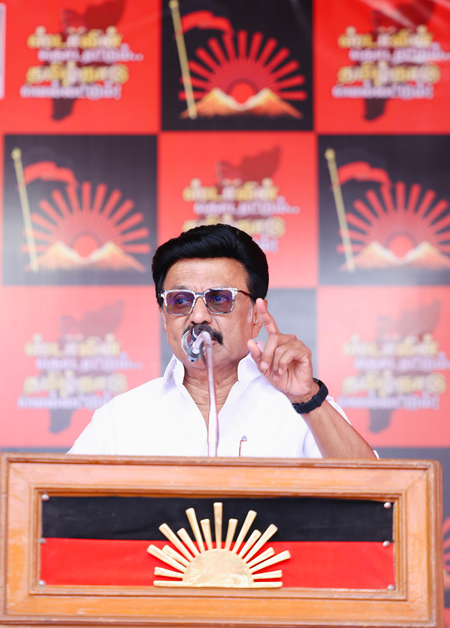
Tamil Nadu Chief Minister M. K. Stalin criticized the Union government and CBSE for planning to introduce a three-language policy from Class 6 in the 2026–27 academic year. He described this move as politically motivated and detrimental to India’s linguistic diversity. The policy, part of the National Education Policy 2020, faced strong opposition from Tamil Nadu, known for resisting mandatory Hindi learning.
Stalin expressed concerns that the policy was an effort to impose Hindi under the guise of promoting Indian languages, accusing the BJP-led NDA government of favoring Hindi over regional languages. He highlighted the lack of reciprocity, questioning whether students in Hindi-speaking states would be required to learn southern languages like Tamil, Telugu, Kannada, Malayalam, Bengali, or Marathi. The Chief Minister criticized the government for not making Tamil compulsory in Kendriya Vidyalaya schools and for inadequate Tamil teacher appointments.
Stalin also raised issues regarding the policy’s implementation, citing insufficient infrastructure, trained teachers, and financial planning. He warned that the policy could create inequalities among states by providing Hindi-speaking students with advantages in higher education and employment. Emphasizing the broader implications beyond language, Stalin argued that the move disregarded federalism, fairness, and equal opportunities, hindering students’ progress in emerging fields like artificial intelligence and gaming.
