


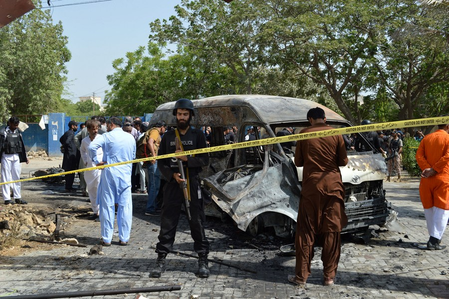
Terrorist groups in Pakistan continue to operate despite extensive military efforts and policies, as highlighted in a recent Congressional report. The report points out that various US- and United Nations-designated terrorist organizations are still active within Pakistan, despite attempts to eradicate them.
The Congressional Research Service report categorizes these groups into five main segments: globally oriented, Afghanistan-focused, India- and Kashmir-centric, domestically driven, and sectarian factions. Pakistan serves as both a hub and a target for these armed, nonstate militant entities, some of which have been in operation since the 1980s.
The report underscores that 12 out of the 15 listed groups are classified as Foreign Terrorist Organizations under US law, with many being driven by Islamist extremist ideologies. Pakistan has witnessed a significant surge in terrorism, with a notable rise in terrorism-related fatalities in recent years, reaching a peak of 4,001 deaths in 2025, the highest toll in over a decade.
Pakistan is currently experiencing the most substantial impact of terrorism globally, attributed to a resurgence of militancy following the Taliban’s resurgence in Afghanistan in 2021. The report also mentions the continued presence of globally focused groups like Al Qaeda and the Islamic State, along with region-specific entities such as the Haqqani Network and India-centric groups like Lashkar-e-Taiba and Jaish-e-Mohammed.
Tehrik-i-Taliban Pakistan is identified as one of the deadliest terrorist organizations in the country, aiming to overthrow the Pakistani government and enforce Sharia law. Additionally, separatist violence in Balochistan, particularly by the Balochistan Liberation Army, has escalated, targeting infrastructure and foreign projects, including those associated with China.
