


The textiles sector in India has experienced significant expansion over the past decade, with its value soaring from Rs 8.4 lakh crore in 2014 to approximately Rs 16 lakh crore presently. This growth has positioned the sector as a major contributor to employment generation, as highlighted by the government. Textiles Minister Giriraj Singh revealed that the domestic market has also surged from Rs 6 lakh crore to Rs 13 lakh crore by 2025, with a notable over 25% increase in the country’s exports post-pandemic.
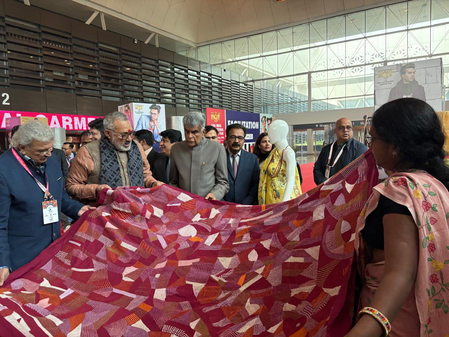
Addressing the 74th Edition of India International Garment Fair (IIGF), Minister Giriraj Singh emphasized the event’s credibility as a trusted platform. He lauded the IIGF for evolving into a significant global stage for international garment buyers. The minister further outlined the government’s efforts to facilitate the textiles industry by eliminating barriers such as QCO, enhancing schemes like RoDTEP and RoSCTL, reducing import duty duration by six months, and rectifying the inverted duty structure.
Singh highlighted the substantial financial support extended to the industry through schemes like RoDTEP and RoSCTL, amounting to Rs 50,000 crore. Despite facing challenges, he commended the industry’s resilience and stability in navigating adversities. The minister also noted the positive outcomes of India’s export diversification strategy, with notable growth percentages in various countries like Argentina, Egypt, Poland, Japan, Sweden, and France.
India’s imminent signing of the India-EU free trade agreement was announced by Minister Giriraj Singh, underscoring the country’s strategic moves towards self-reliance and the development of indigenous standards. The chairman of AEPC, Dr. A Sakthivel, emphasized the comprehensive representation of exhibitors from across India at the IIGF, showcasing the robust manufacturing ecosystem. He further highlighted the growth in cumulative RMG exports during April–December 2025–26, amounting to $11,584.3 million, reflecting a 2.4% increase from the previous year.
