


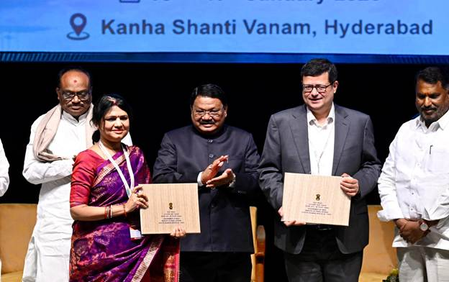
Tribal Affairs Minister Jual Oram highlighted a national initiative to recognize and engage tribal healers in the public health system. He emphasized the importance of India’s indigenous medicinal traditions and their effectiveness. Nearly 400 tribal healers from across the country participated in the Capacity Building Programme for Tribal Healers on Strengthening Health Outreach in Tribal Areas.
Oram mentioned that technical sessions by experts from various institutions would enhance the knowledge and service delivery capacities of tribal healers. He also encouraged states to create partnerships with FMCG and pharmaceutical companies to support traditional medicine and create livelihood opportunities. The Minister reiterated the Ministry’s focus on addressing tribal health disparities through various initiatives like the National Sickle Cell Anaemia Elimination Mission and PM-JANMAN.
Tribal Affairs Secretary Ranjana Chopra highlighted the essential role of tribal healers in community-based health solutions. She emphasized the cost-effectiveness and sustainability of such approaches. Chopra also stressed the need to eliminate communicable diseases like malaria, tuberculosis, and leprosy from tribal areas. Additional Secretary Manish Thakur emphasized the trust and social legitimacy tribal healers hold within their communities.
Thakur mentioned the Ministry’s vision of tribal healers as collaborative partners in health programs, particularly in preventive care and early illness identification. He pointed out the barriers that limit tribal communities’ access to formal healthcare and the role of trusted healers in strengthening service delivery. Minister of State for Tribal Affairs Durgadas Uikey highlighted the importance of Scheduled Tribes in the vision of Viksit Bharat.
Uikey noted the impact of both communicable and non-communicable diseases in tribal areas and the rich traditional knowledge preserved by tribal communities. He called for an integrated approach combining traditional wisdom with modern science to address lifestyle diseases. Uikey also emphasized the resilience, immunity, and responsible consumption lessons that tribal communities offer to society.
The session on Orientation of Tribal Healers to Public Health Systems, led by Kannan P., Consultant at the National Health Systems Resource Centre, outlined the care continuum and the role of tribal healers as connectors in the healthcare system. Dr. Dilip Singh Mairembam from WHO presented global case studies emphasizing the importance of engaging healers as community mobilizers and referral agents.
