


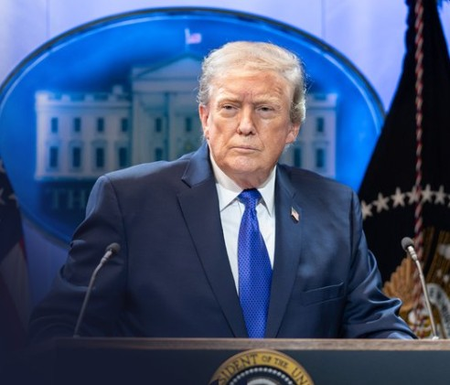
US President Donald Trump has announced a conditional two-week pause in planned attacks on Iran, aimed at reopening the Strait of Hormuz. This decision, made just 90 minutes before a deadline set by Trump, followed backchannel diplomacy involving Pakistan. Trump stated on social media that the pause in attacks would last for two weeks if Iran agrees to open the key shipping route.
In his post on Truth Social, Trump mentioned that talks with Pakistan led to what he termed a “double-sided ceasefire.” He highlighted that the US had achieved its military objectives and made progress towards a long-term peace agreement with Iran and in the Middle East. Trump also mentioned receiving a 10-point proposal from Iran, which he described as a basis for negotiation.
The ceasefire proposed by Trump is contingent on Iran agreeing to the immediate and safe opening of the Strait of Hormuz. Iran’s Foreign Minister indicated a tentative acceptance of the proposal, stating that Iran’s Armed Forces would halt defensive operations if attacks against Iran ceased. The possibility of safe passage through the strait for two weeks was also mentioned, subject to coordination with Iran’s Armed Forces.
A White House official noted that Israel had also agreed to the two-week pause, although specific details were not provided. The announcement of the pause followed a period of heightened tensions, with Trump warning earlier of dire consequences if a deal was not reached with Iran. The closure of the Strait of Hormuz has had significant impacts on oil supplies and prices.
Reports of missile and drone activities in the Gulf after the announcement have raised concerns about the enforcement of the ceasefire. The two-week pause presents a limited timeframe for diplomatic efforts, with key issues remaining unresolved, including sanctions, Iran’s nuclear program, and control over the strait. The conflict, marked by strikes on Iranian targets, poses risks of a broader regional war, given the strait’s importance in global oil shipments.
For India, heavily reliant on energy flows from the Gulf, any disruption in the strait or escalation in the conflict could have direct economic and strategic implications.
