


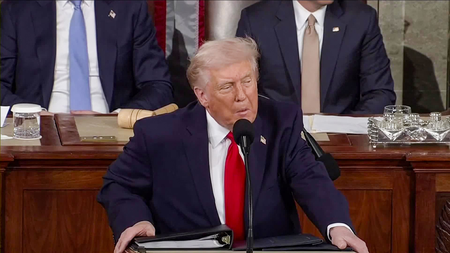
US President Donald Trump, when asked if his actions in the Iran war could constitute a war crime, responded curtly at the White House. Trump, in a brief exchange with reporters, defended the US campaign in Iran and reiterated that the war’s focus is to prevent Iran from obtaining nuclear weapons. He emphasized that the conflict’s core objective is to ensure Iran does not possess nuclear arms.
Trump, while discussing the scale of US military involvement, stated that the country is being “obliterated.” Despite expressing reluctance over this, he warned of further escalation if Iran does not comply. The President highlighted the degradation of Iran’s military capabilities, stating that they are unable to effectively retaliate due to their diminished resources.
In his remarks, Trump suggested that the war could swiftly conclude under specific circumstances. He implied that Iran’s cooperation could lead to a rapid end to the conflict. Trump also justified US actions by connecting them to broader regional security interests, claiming that Israel would have faced dire consequences had he not withdrawn from the Iran nuclear deal.
During the interaction, Trump addressed civilian impacts and conditions within Iran. He alleged that Iranians desire the conflict to persist until desired changes occur, suggesting that they associate the sound of bombs with freedom. Trump also accused Iran of using lethal force to suppress internal protests, indicating that demonstrators would face immediate violence if they took to the streets.
The President referenced casualty figures among protesters, stating that 45,000 individuals had been killed, a situation he described as “pretty bad.” These statements were made during a public event at the White House, where Trump fielded numerous inquiries regarding the ongoing war and US strategies in the region. The scrutiny surrounding the war’s conduct, particularly concerning civilian repercussions and rules of engagement, continues to intensify on the international stage.
