


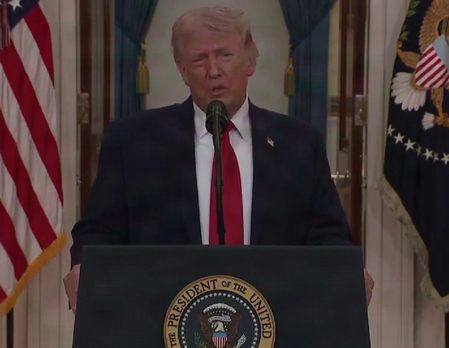
US President Donald Trump, in a recent address, mentioned that the Iran conflict was close to an end but failed to provide clarity on crucial aspects like strategy and escalation. Reports suggest that he did not specify if American ground troops would be sent to Iran despite ongoing discussions in Washington. Additionally, Trump did not outline any diplomatic solutions or exit strategies, hinting that the conflict might persist for another few weeks.
The President’s speech lacked details on the involvement of key allies such as Israel in the military operations in the region. He also did not touch upon coordination with NATO partners, raising concerns given previous tensions over alliance support. Trump briefly mentioned the strategic Strait of Hormuz, indicating that other nations reliant on Middle East oil should lead efforts to reopen it post-conflict.
While Trump stated that regime change was not the goal in Iran, he hinted at leadership shifts following US and Israeli strikes. However, he did not delve into Iran’s evolving political landscape or prominent figures like Mojtaba Khamenei, a reported influential figure after recent senior officials’ deaths. The President also did not address potential efforts to secure Iran’s nuclear material, a task experts warn would involve risky ground operations due to buried enriched uranium.
Despite Trump’s claims of significantly reducing Iran’s military capabilities, reports indicate ongoing missile and drone attacks by Tehran across the region. The address mainly reiterated existing points without introducing new military or diplomatic strategies. Analysts noted that the lack of specifics on ground operations, Hormuz security, and post-war governance creates uncertainty about the conflict’s next phase.
The ongoing conflict in its second month continues to impact global energy supplies due to the critical role of the Strait of Hormuz. Market disruptions and supply chain issues have already emerged, raising concerns about escalation risks, regional stability, and the broader US strategy in the Middle East.
